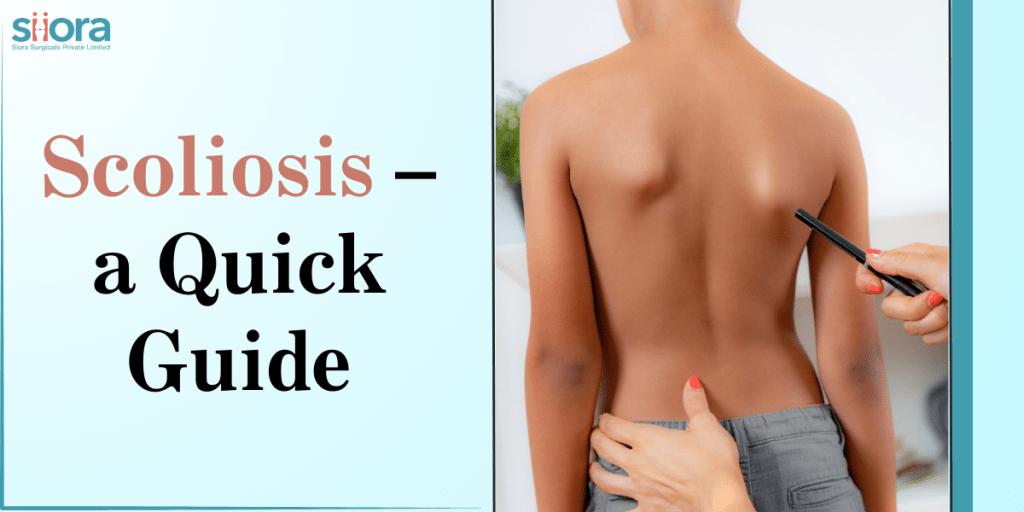
Scoliosis is a spinal condition that is characterized by the sideways curvature of the spine. In most cases, this condition can be diagnosed in adolescents. Everyone’s spine has a natural forward-and-backward curve. In scoliosis, the spine develops a side-to-side curvature, and the degree of the curvature may vary from 10 degrees to 100 degrees or even more. What type of treatment is needed depends on the severity of the condition.
Most scoliosis cases are mild, and they can be treated with conventional non-operative methods. While on the other hand, severe cases that do not respond to the above-mentioned treatment require surgery. The surgery may require the use of special Orthopaedic Trauma Implants and Instruments.
The treatment provided in this condition often aims at relieving the associated symptoms. The treatment also helps improve the function of the spine. In this post, our goal is to discuss scoliosis in detail along with its symptoms, diagnosis, and treatment. Depending upon the curvature degree of the spine, changes in the appearance of the body may also be experienced.
What Are the Causes of Scoliosis?
Age-related curvature of the spine is considered to be the common cause of scoliosis, but doctors are still making studies to confirm that. Multiple traumatic and non-traumatic causes of the condition are there, and they also define the severity of scoliosis.
Pediatric scoliosis that is not detected during childhood is also the reason for adult scoliosis. Sometimes, the cause of scoliosis remains unknown, and that condition is known as idiopathic scoliosis. When this form of scoliosis starts or gets diagnosed during puberty, the condition is known as adult idiopathic scoliosis.
Some other causes of scoliosis are also there, and they may include:
- Spinal injuries
- Spinal cord abnormalities
- Infections in the spine
- Birth defects related to bones
- Conditions like cerebral palsy or muscular dystrophy
What Are the Symptoms of Scoliosis?
Symptoms may not be noticed in most cases of scoliosis but, back pain may be experienced. With this, some of the other signs & symptoms may include:
- Uneven shoulders
- One side of the rib cage extends forward
- Uneven waist
- One hip appears higher than the other
- One shoulder blade is more prominent than the other
What Are the Complications Associated with Scoliosis?
Below mentioned are the complications that people suffering from scoliosis may experience:
- Breathing issues
- Chronic back pain
- Noticeable changes in body’s appearance
What is the Diagnosis of Scoliosis?
A detailed medical history check followed by questions related to previous injuries and recent growth are asked during the diagnosis of the condition. This is done to identify the possibilities of causes.
During the physical examination, the healthcare service provider may ask the affected person to bend, stand straight, and make some other movements to identify painful areas and movements. Neurological examination may also be performed to check abnormal reflexes, muscle weakness, and numbness.
X-rays are also ordered to confirm the condition and its severity. MRI may also be ordered afterward if the healthcare service provider suspects spinal cord abnormality as the cause of the condition.
What is the Treatment of Scoliosis?
The maximum cases of scoliosis can be treated with non-surgical methods that include medications to curb pain and strengthening exercises to improve flexibility and make the abdomen strong. Physical therapy may also be ordered to improve the range of motion.
The person suffering from scoliosis is also advised to quit smoking and consumption of any form of tobacco. Besides this, alcohol intake must also be avoided.
Some adult scoliosis cases might require surgery. This is when the condition is serious or conventional treatment methods fail to provide any relief. Surgery is required to improve the life’s quality and relieve painful symptoms. During the surgical intervention, spinal implants are also required.Siora Surgicals Pvt. Ltd. is one of the experienced Orthopedic Products Manufacturers in India. Operating for over 30 years, the company manufactures hundreds of types of trauma implants that are also exported to clients based in other countries. Siora is also a reliable company that offers quality OEM/contract manufacturing services globally. The company is also looking to establish its strong presence as a trustworthy supplier for orthopedic implants in Thailand.
 An Educational Guide to Shoulder Fracture